
Most homeowners rarely think about the sewer line running beneath their yard. It does its job quietly — carrying wastewater away from the house every day — and as long as nothing goes wrong, it stays completely invisible. But when something does go wrong underground, the signs show up inside the home as slow drains, strange smells, and toilets that struggle to flush.
One of the most common reasons sewer systems fail — and one that surprises many homeowners — is tree roots in sewer line pipes. Tree roots don’t grow randomly. They grow toward moisture, and buried sewer pipes release exactly that. Once roots find a way into the pipe, what starts as a hairline crack can eventually become a complete blockage or structural pipe collapse.
At Solid Plumbing & Drains, we’ve dealt with root intrusion in homes all across San Diego County — from newer neighborhoods to communities with trees that have been growing for decades. Understanding how tree roots in sewer line systems develop — and what warning signs to watch for — helps homeowners act before a slow-moving problem becomes a full plumbing emergency.
Why Sewer Lines Are So Vulnerable to Tree Roots
Sewer lines have one design characteristic that inadvertently attracts roots: they’re not perfectly sealed. Older pipes made from clay, concrete, or cast iron develop small gaps at their joints over time. Even newer PVC pipes can develop hairline cracks from ground shifting or age. These tiny openings release moisture vapor into the surrounding soil.
Tree roots follow that moisture gradient. The root doesn’t know there’s a pipe in the way — it just grows in the direction that leads to water. Once the root reaches the pipe, even the smallest opening is enough for it to work its way inside. Once it’s in, the conditions are perfect: warm, moist, and full of the nutrients that help roots grow quickly.
This is why tree roots in sewer line pipes are such a persistent and recurring problem — especially in neighborhoods where large trees have been growing for 20, 30, or 40 years.
What Happens After Roots Enter the Pipe
When a root first enters a sewer pipe, it may look like a thin strand. That’s easy to underestimate. But tree roots don’t stay thin. As wastewater flows through the pipe, it delivers the nutrients the root needs to thrive. The root gets thicker. New branches grow off the main strand. Eventually the entire inside of the pipe can become filled with a dense web of root growth.
As the root system expands, it starts catching everything that flows through the pipe. Grease, paper, food particles — all of it gets trapped in the root mass. This buildup creates a blockage that gets worse with every flush. That’s one of the most common sewer line blockage causes homeowners experience in older residential areas — and one of the hardest to clear without professional help.
At the same time, roots put physical pressure on the pipe itself. They push against the crack where they entered, slowly widening it. In some cases — especially with older clay pipes — roots can completely break apart pipe sections underground. Understanding how tree roots damage pipes is important for knowing how urgent a response actually needs to be.
Early Signs of Roots in Sewer Pipe Systems
Root intrusion develops slowly, which means there’s usually a window of time where warning signs appear before the problem becomes severe. These are the most common signs of roots in sewer pipe systems that homeowners should watch for:
- Drains that empty slowly throughout the house — not just one fixture
- Toilets that gurgle or bubble when other fixtures drain nearby
- Repeated clogs in showers, sinks, or floor drains that keep coming back
- Sewer odors rising up through drains even when everything looks clean
- Multiple fixtures backing up or draining slowly at the same time
These sewer backup warning signs occur because wastewater can’t move smoothly through a pipe that’s been partially blocked by roots. When drains in multiple parts of the house slow down at the same time, that’s a strong signal the main sewer line — not just one fixture’s drain — is involved.
If you’ve been dealing with recurring clogged drains that come back shortly after clearing, root intrusion is one of the most likely explanations. Clearing the symptom without diagnosing the cause just means it will come back again.
How Root Intrusion Leads to Sewer Backups
As roots continue growing inside the pipe, they restrict the space available for wastewater to flow. Eventually the pipe may become so blocked that water can no longer pass through at all. When that happens, wastewater starts flowing backward — toward the house instead of away from it.
A full sewer backup is one of the most serious plumbing emergencies a homeowner can face. Raw sewage can surface through floor drains, toilets, or shower drains. Water damage, sanitation concerns, and structural issues can all follow quickly. The sewer backup warning signs that show up in the months leading up to a full backup are usually the only real opportunity to avoid that outcome.
The U.S. Environmental Protection Agency identifies root intrusion as one of the leading causes of sanitary sewer overflows in both residential and municipal systems. It’s a well-documented infrastructure problem — not a minor inconvenience — and it requires active attention to manage.
Why Older Sewer Lines Are at Greater Risk
Many homes in San Diego still have sewer lines that were installed 40, 50, or even 60 years ago. These older pipes — often made from clay or cast iron — weren’t designed with the same tight, continuous connections that modern PVC systems provide. Their joints separate slightly over time, and those gaps are exactly what roots are looking for.
The older the pipe, the more likely it has already developed small cracks or loose joint connections that give roots an easy entry point. This is why tree roots in sewer line problems are so common in established neighborhoods where both the trees and the pipes have been growing for decades alongside each other.
Understanding how tree roots damage pipes in aging infrastructure is part of why proactive sewer inspections are worth scheduling — not just when something goes wrong, but as a routine maintenance step every few years.
How Landscaping Choices Affect Your Sewer Line
Many homeowners don’t realize that tree placement in the yard has a direct relationship to the sewer line running beneath it. Large trees with aggressive root systems — like willows, sycamores, and eucalyptus — can extend their roots 20 to 30 feet or more in search of moisture. That’s often well beyond the visible canopy of the tree above ground.
If your sewer line runs beneath or near landscaped areas, those roots may eventually reach it. This doesn’t mean you can’t have large trees in your yard — it just means that species selection and placement matter when it comes to protecting your underground plumbing. Knowing where your sewer line runs before planting large trees near your home is a simple way to avoid setting up a future problem.
Root Intrusion in San Diego Neighborhoods
Root intrusion is a common issue in San Diego neighborhoods with mature landscaping and older plumbing infrastructure. Areas near Mission Trails Regional Park feature large native trees and natural landscapes that support extensive underground root systems. In surrounding residential areas, homeowners occasionally encounter underground plumbing damage caused by root growth working through aging sewer lines.
Schools and commercial buildings face the same risks on a larger scale. Facilities near Patrick Henry High School rely on complex plumbing systems that serve hundreds of students daily. When root intrusion develops in a large building’s sewer system, the disruption can affect the entire facility. Recognizing early signs of roots in sewer pipe systems helps property managers and homeowners respond before a full backup occurs.
How Sewer Line Inspections Detect Root Problems Early
One of the most effective tools for catching root intrusion before it becomes a crisis is a professional sewer line camera inspection. A small waterproof camera is fed through the pipe, and technicians can see exactly what’s happening inside — root growth, pipe cracks, blockages — without digging anything up.
This type of inspection provides the kind of direct evidence that guesswork simply can’t match. You can see exactly where the roots are, how thick they’ve grown, and whether they’ve already caused structural damage to the pipe walls or joints. A camera line inspection is one of the most valuable sewer line inspection tips for any homeowner dealing with recurring drainage issues.
Early inspection also means simpler repair options. Root intrusion caught before structural damage occurs can often be cleared without major excavation. Root intrusion that’s been growing unchecked for years may require more extensive sewer repair services to properly restore the line.
Clearing Root Blockages From Sewer Lines
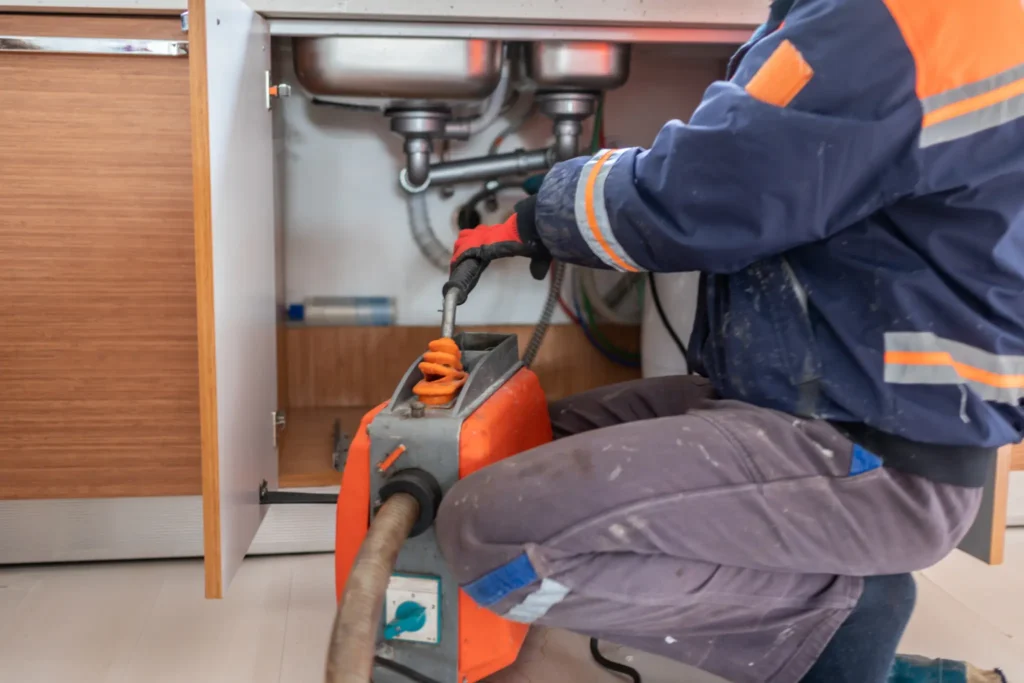
When roots have built up inside a sewer pipe but haven’t yet caused structural damage, hydro jetting is often the most effective clearing method. High-pressure water breaks apart root growth, flushes out debris, and restores proper flow through the pipe. Professional drain cleaning can remove years of root and debris buildup and get the sewer line functioning correctly again.
However, clearing the roots doesn’t permanently solve the problem if the cracks or openings that let the roots in are still there. Without addressing the underlying pipe damage, roots will grow back through the same entry points — sometimes faster the second time, because the opening is now wider.
For pipes where roots have created significant structural damage, pipe lining or repiping may be the most durable long-term solution. Our guide on trenchless vs. traditional sewer line replacement explains the options available to San Diego homeowners and what each approach actually involves.
When Root Damage Requires Pipe Repair or Replacement
Not every root intrusion problem can be solved with cleaning alone. When roots have cracked pipe walls, separated joints, or caused sections to collapse, structural repair is needed. Clearing the blockage in these cases won’t prevent it from happening again — because the pipe itself is compromised.
Drain line repair or full pipe replacement may be required, depending on how much structural damage has occurred. Modern trenchless repair methods can often restore a sewer line without extensive digging, which makes the process far less disruptive than traditional excavation. You can learn more about how these methods work in our article on modern sewer repair methods for San Diego properties.
Protecting Your Sewer Line From Future Root Intrusion
After clearing and repairing a root problem, the goal is to make sure it doesn’t happen again. Here’s what makes a lasting difference:
- Schedule camera inspections every few years — especially if large trees grow near your sewer line
- Address any pipe cracks or loose joints before roots have a chance to find them
- Consider lining the repaired pipe to create a smooth, seamless interior surface that roots can’t penetrate
- Be thoughtful about tree species and placement when landscaping near buried utility lines
The Solid Care Plan includes annual plumbing maintenance that helps catch early warning signs before root intrusion becomes a serious and expensive problem. Annual maintenance costs far less than emergency repairs — and it protects a part of your home that most people never think about until something goes wrong.
The International Association of Plumbing and Mechanical Officials (IAPMO) sets the plumbing and drainage codes that govern how sewer systems are installed and repaired. When roots damage a residential sewer line, repairs completed to those standards ensure the fix holds up over the long term — not just for now.
Don’t Wait for a Full Backup to Act
Tree roots in sewer line pipes are one of the most preventable causes of major plumbing damage — when the problem is caught early. The signs of roots in sewer pipe systems usually appear well before a full blockage or backup occurs. Slow drains, gurgling fixtures, and recurring clogs are all telling you something is wrong underground.
If you’re seeing these sewer backup warning signs, don’t wait to investigate. Catching root intrusion while it’s still manageable saves time, money, and a significant amount of stress. Our tree root plumbing services are designed to address root intrusion at every stage — from early detection to full pipe repair.
Explore our full range of plumbing services or contact Solid Plumbing & Drains at (619) 597-2566 to schedule a sewer line inspection and protect your plumbing from root damage before it becomes an emergency.