
A suspected gas leak is one plumbing problem that should never wait. If you smell rotten eggs, hear hissing near a gas appliance, or notice other warning signs, leave the building immediately. Once you are safely outside and far from the suspected leak, call 911 or your gas utility. An emergency gas leak plumber can inspect and repair the damaged gas line after emergency officials or the utility company make the area safe.
Do not search for the leak, touch an appliance, flip a light switch, or use your phone while you are still inside. Even a small spark may ignite leaking gas. This guide explains seven steps to take, how an emergency gas leak plumber finds the problem, and what you can do to reduce the chance of another leak.
When Should You Call an Emergency Gas Leak Plumber?
You should call an emergency gas leak plumber whenever a gas line, appliance connector, valve, or fitting may be leaking. However, the plumber should not be your first call from inside the property. Your first job is to get everyone outside. Then call 911 or the gas company from a safe location.
In San Diego County, the SDG&E gas leak safety guide tells customers to evacuate immediately and call SDG&E at 1-800-411-7343 or call 911 from a safe place. The utility can shut off or secure the gas supply when needed. After the immediate danger is controlled, an emergency gas leak plumber can locate and repair problems on the customer-owned part of the gas system.
Do not assume the danger has passed because the smell becomes weaker. Air movement can carry the odor away while gas is still leaking. A weak or fading odor is not proof that the building is safe.
7 Safety Steps Before an Emergency Gas Leak Plumber Arrives
1. Leave the Building Immediately
Tell everyone to leave right away, including children, visitors, and employees. Take pets only if you can do so without delaying your exit. Walk outside calmly and move a safe distance away from the building. Do not stop to collect valuables or investigate where the smell is strongest.
If you live in a shared building, warn others only when it is safe. Do not go door to door through an area that may contain gas. Give emergency responders the information and let them manage the evacuation.
2. Avoid Flames, Sparks, and Electrical Devices
Do not light a match, smoke, use a candle, start a vehicle near the building, or operate electrical equipment. Do not switch lights on or off. Do not unplug anything. A switch or motor can produce a tiny spark, and that may be enough to ignite collected gas.
The Pipeline and Hazardous Materials Safety Administration also warns people not to use a telephone, garage door opener, electrical switch, or engine in the leak area. Wait until you are outside and well away from the suspected leak before making a call.
3. Call 911 or the Gas Utility from a Safe Place
Call from outside, a neighbor’s property, or another safe location. Explain what you smelled, heard, or saw. Tell the dispatcher whether anyone feels sick and whether the property is a home, apartment, restaurant, office, or other building.
The fire department or utility company may test the air, close the gas supply, and decide whether the area is safe to approach. Follow every instruction they give you. An emergency gas leak plumber should begin work only after the emergency hazard has been addressed.
4. Do Not Try to Repair the Leak Yourself
A gas repair is not a safe do-it-yourself project. Tape, putty, or a tightened fitting may appear to stop a smell without making the line safe. A poor repair can also move stress to another joint or hide a leak that returns later.
Do not close a gas valve unless the utility or emergency authorities tell you to do so and you already know the correct procedure. Do not enter a dangerous area just to reach a shutoff valve. Your safety matters more than the building.
5. Keep Everyone Away from the Property
Do not let anyone return for a wallet, medication, pet, or other item until emergency officials say it is safe. Keep people away from garages, basements, utility rooms, meters, and outdoor areas where leaking gas may collect or travel.
A gas leak can move through wall spaces, soil, pipe openings, and nearby rooms. That is why the place where you smell gas may not be the place where the line failed. An emergency gas leak plumber needs to test the system instead of relying on odor alone.
6. Share Useful Details with the Emergency Gas Leak Plumber
Once the property has been cleared for repair work, tell the plumber when you first noticed the problem and where the odor seemed strongest. Mention recent appliance installations, construction, earthquakes, digging, or work near a gas pipe. Also report any hissing, damaged connections, dying plants, or unusual appliance behavior.
These details do not replace testing, but they can give the emergency gas leak plumber a useful starting point. For example, an odor that began soon after a range was moved points to a different area than a leak found near an underground line.
7. Wait for Approval Before Turning the Gas Back On
Never restore gas service on your own. Depending on the situation, the repaired system may need a pressure test, inspection, permit, or utility approval. Appliances may also need to be checked and relit in a safe order.
An emergency gas leak plumber can explain which repairs were completed and what must happen next. Return to the building and use gas appliances only when the proper authority confirms that it is safe.
Warning Signs That Require an Emergency Gas Leak Plumber
Natural gas is naturally hard to smell, so utility providers add an odor that is often compared to rotten eggs or sulfur. That odor is an important warning, but it is not the only sign of a leak.
You may hear a hissing, whistling, or roaring sound near a gas line, meter, stove, water heater, fireplace, or furnace. Outside, you may see dirt or water blowing for no clear reason. Plants may die over an underground gas line while nearby plants remain healthy.
A damaged appliance connector, exposed pipe, or broken meter connection is another reason to leave and report the problem. Physical symptoms can include headache, dizziness, nausea, weakness, or confusion. Anyone who feels sick should move into fresh air and seek emergency medical help.
It is also important to understand that natural gas and carbon monoxide are different hazards. Natural gas is fuel that can burn or explode. Carbon monoxide is a poisonous gas created when fuel does not burn correctly. It has no color or smell. A carbon monoxide alarm does not necessarily detect a natural gas leak, so never use one alarm as proof that the building is safe.
What Does an Emergency Gas Leak Plumber Do?
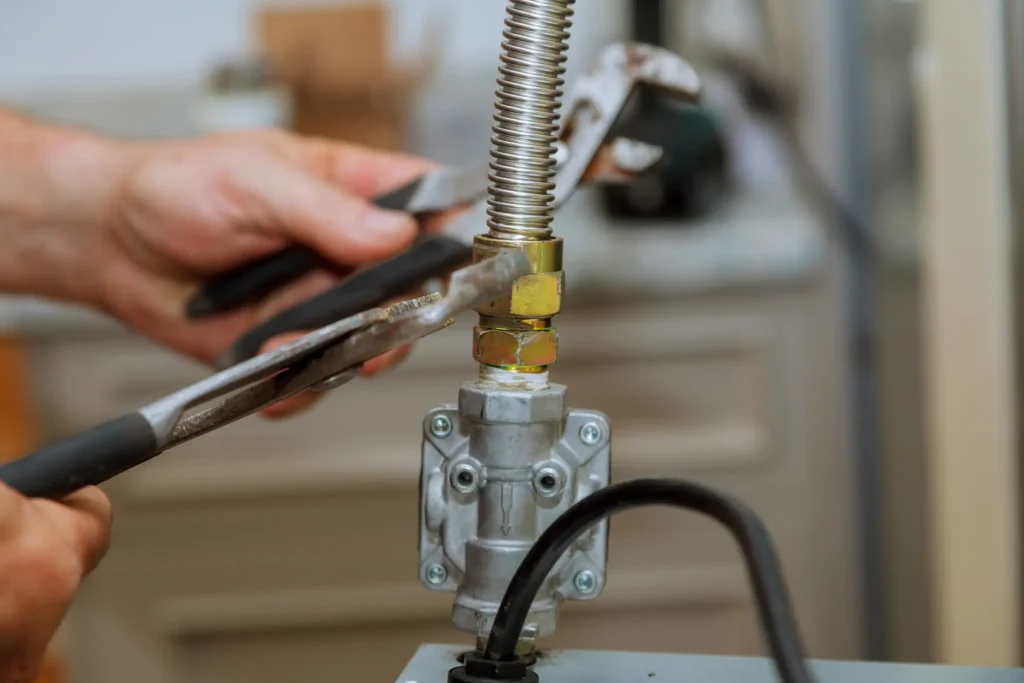
After the property is cleared for plumbing work, the emergency gas leak plumber reviews the gas system and gathers information about the suspected leak. The inspection may cover exposed pipes, appliance connectors, shutoff valves, fittings, and sections of line that pass through walls or underground.
The plumber may isolate parts of the system and perform a pressure test. A pressure test checks whether a sealed gas line loses pressure. If it does, there may still be a leak. Specialized detection equipment can help narrow down the damaged area without making unsafe guesses.
The right repair depends on what failed. A damaged connector may need replacement. A leaking valve or fitting may need to be removed and correctly rebuilt. An old, corroded, or poorly sized pipe may require a larger section of the gas line to be replaced.
Solid Plumbing & Drains provides professional gas leak detection services to help identify suspected problems. When a gas line needs repair or replacement, its gas line plumbing service can address the damaged customer-owned piping and explain the next steps.
Why Gas Leak Location Is Often Harder Than It Looks
Many people believe the strongest smell must point directly to the leak. In real homes, that is not always true. Gas can travel through cabinets, wall openings, crawl spaces, and gaps around pipes. Heating and cooling systems can also move odors from one room to another.
One lesson experienced plumbers learn is that the obvious location should be treated as a clue, not a conclusion. A smell near a stove may come from its connector, but it may also come from a nearby wall line. Replacing a connector without testing the rest of the system could leave the real problem unfixed.
This is why a careful emergency gas leak plumber tests the system after making a repair. Finding one loose fitting is not enough if another part of the line is also leaking. The goal is to confirm that the repaired system can safely hold pressure.
Common Causes of Emergency Gas Leak Plumber Calls
Old gas pipes can weaken from age, moisture, rust, movement, or poor past repairs. Flexible appliance connectors may become bent, damaged, or loose when a stove or dryer is moved. Valves and threaded fittings can also wear or lose their seal.
Construction is another common cause. A screw, nail, saw, or drill can damage a hidden line. Outdoor digging can strike an underground pipe. Earth movement and earthquakes may place stress on pipes and connections, especially when a line was not properly supported.
Sometimes a new appliance reveals a problem with the existing system. The gas line may be too small, incorrectly arranged, or in poor condition. A professional plumbing repair assessment can help determine whether a focused repair or a wider upgrade makes sense.
How to Help Prevent a Future Gas Leak
Prevention begins with paying attention. Look at visible appliance connectors from a safe distance and arrange service if you see damage, corrosion, or heavy bending. Do not move a gas appliance without planning for its connection. Never hang objects from gas pipes or use them as supports.
Have gas appliances installed and serviced by qualified professionals. If you are remodeling, tell the contractor where gas piping may be located before walls or floors are cut. Call 811 before digging so underground utility lines can be marked.
Keep working carbon monoxide alarms on every level of the home and near sleeping areas, following the manufacturer’s placement instructions. Remember that these alarms help with carbon monoxide safety but do not replace gas-line inspections or the need to report a rotten-egg odor.
It is also wise to know who to call before trouble begins. Save the utility emergency number and the number for an emergency gas leak plumber in your phone. A simple household plan can prevent confusion when every minute matters.
Questions to Ask an Emergency Gas Leak Plumber
Ask which part of the gas system failed, how the leak was confirmed, and what repair was performed. You should also ask whether other parts of the line showed wear and whether a pressure test is required after the repair.
Find out whether permits, inspections, or utility approval are needed before service can be restored. Ask for a clear explanation of who is responsible for each step. The plumber, gas utility, inspector, and property owner may each have a different role.
A trustworthy emergency gas leak plumber should be able to explain the repair in plain language. You should understand what was fixed, what still needs attention, and when the property can safely use gas again.
Call an Emergency Gas Leak Plumber After the Area Is Safe
If you suspect a gas leak, do not wait for the odor to disappear. Leave immediately, avoid anything that might create a spark, and call 911 or the gas utility from a safe location. Do not return until emergency officials give permission.
Once the immediate danger has been controlled, an emergency gas leak plumber can test customer-owned piping, find the source, and complete the proper repair. Solid Plumbing & Drains also offers emergency plumbing services in San Diego for urgent plumbing problems that require professional attention.
Gas safety depends on the order of your actions: leave first, report the danger second, and arrange professional repairs after the scene is cleared. That simple order protects your family, your property, emergency responders, and the plumber coming to help.