
The thermal expansion tank requirement can come up when you replace a water heater, fix high pressure, or install a new valve. Suddenly, there is another part on the estimate. What does it do? Is it required? And why did your old heater work without one?
The short answer: when a plumbing system traps water that grows in volume as it heats, it needs an approved way to handle that growth. An expansion tank is a common solution. For San Diego County homeowners, the thermal expansion tank requirement depends on the plumbing layout, applicable code, and equipment instructions. These nine facts will help you understand the recommendation and ask better questions.
1. The thermal expansion tank requirement starts with trapped water
Water takes up more space as it gets warmer. Inside a closed plumbing system, that extra volume cannot flow back toward the public supply. Pressure can rise while the water heater runs, even when nobody is using a faucet.
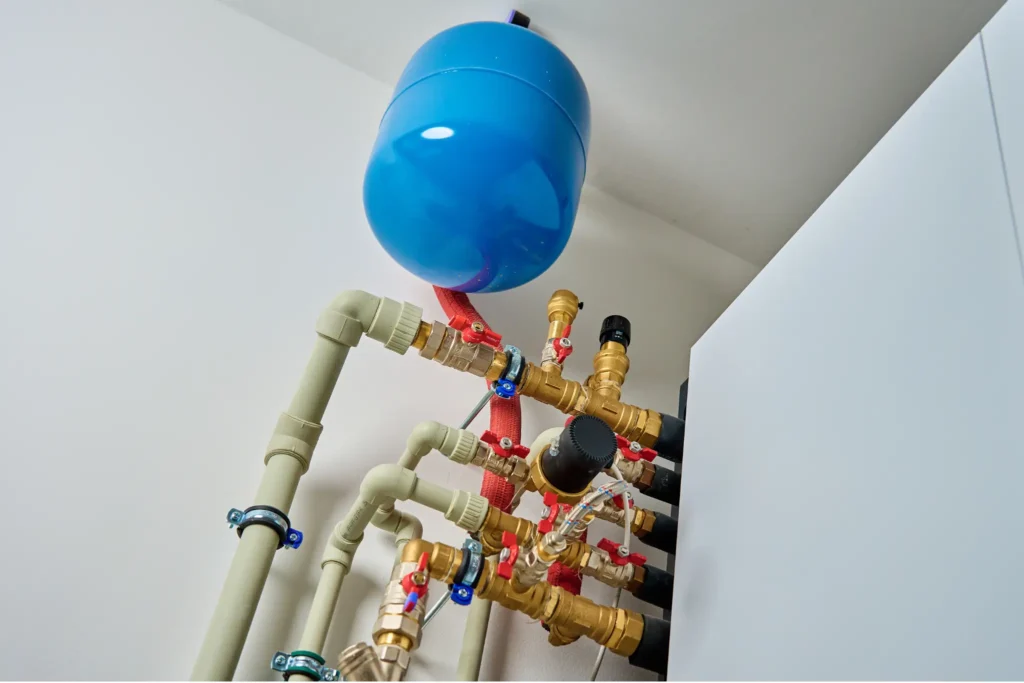
An expansion tank provides a small cushion. Inside, a flexible divider separates water from a pocket of air. The air compresses as expanded water enters. That gives the extra water somewhere to go. This pressure cushion is the practical reason behind the thermal expansion tank requirement.
The thermal expansion tank requirement is about controlling that pressure. It is not extra hot-water storage for longer showers. The tank also does not heat water or improve a heater’s recovery speed. Its job is to accept expansion during heating cycles.
Watts explains thermal expansion and its control options, including tanks that contain expanded water and devices that release it. Understanding that difference helps explain why the thermal expansion tank requirement may allow another approved solution, depending on the governing rules.
2. The thermal expansion tank requirement follows the applicable code
For California projects, start with the correct code edition. The 2025 California Plumbing Code took effect January 1, 2026. You can access the publication through IAPMO’s official California Plumbing Code page. Local amendments and permit rules also matter when checking the thermal expansion tank requirement.
Section 608.3 addresses systems with a check valve, backflow preventer, or another normally closed device that stops building pressure from returning to the water main. It calls for an approved, listed, properly sized expansion tank or another approved device that performs a similar function.
That means the thermal expansion tank requirement is more specific than “every heater needs this exact tank.” It concerns the system’s pressure path and an acceptable means of expansion control. The local building department determines what it will accept for your project.
Ask your installer to identify the valve that closes the system and explain the proposed protection. A clear answer connects the thermal expansion tank requirement to your home’s actual plumbing. It should also explain any local approval needed for an alternative device.
3. A valve change can affect the thermal expansion tank requirement
A check valve allows flow in one direction. A backflow preventer helps keep water from reversing toward the supply. Some pressure-reducing valves also block reverse flow. These parts serve useful purposes, but they can leave heated water without a return path.
The thermal expansion tank requirement may therefore come up during work that seems unrelated to the water heater. A new pressure regulator or a change at the meter can change how the system handles expanding water. The heater can stay exactly where it was while the thermal expansion tank requirement becomes a new concern.
Consider a simple example. A homeowner replaces an old regulator. Soon afterward, a faucet gives a brief strong burst when first opened after the heater runs. That timing is worth reporting. It gives the plumber a reason to check both supply pressure and pressure changes during heating.
The lesson is to review the thermal expansion tank requirement whenever a project changes the water’s path. Ask for that review before the work begins. Do not remove a protective valve to make expansion disappear; the system needs a suitable way to manage both concerns.
4. The thermal expansion tank requirement does not replace pressure regulation
High incoming pressure and pressure caused by heating are different problems. A pressure regulator reduces pressure entering the home. An expansion tank accepts the extra volume created inside the system. One device cannot automatically take over the other’s job.
Checking the thermal expansion tank requirement should include looking at when pressure rises. A reading taken while everything is cool gives one piece of information. Watching what happens through a heating cycle gives another. A single normal reading does not describe every operating condition.
A. O. Smith’s thermal expansion bulletin describes clues such as relief-valve dripping during recovery, faucet drips, and a surge when a valve first opens. These clues support an inspection. They do not prove the cause on their own.
If the thermal expansion tank requirement appears on an estimate for a pressure complaint, ask whether the regulator was checked too. Solid Plumbing’s water pressure services are a relevant starting point for that discussion. Request the measured findings so you understand which part of the repair addresses each problem.
5. Proper sizing is part of the thermal expansion tank requirement
Expansion tanks are not selected by appearance. A small tank that fits neatly above the heater may lack enough working capacity. Using your neighbor’s setup to meet the thermal expansion tank requirement is also a weak shortcut. Two homes can have different pressure and temperature conditions.
To meet the thermal expansion tank requirement, the installer needs the heater’s stored volume, incoming water temperature, heated water temperature, supply pressure, and the design pressure limit. The manufacturer’s sizing method uses these details to choose a suitable model.
The tank’s total volume is different from its acceptance volume. Acceptance volume means how much expanded water it can receive under stated conditions. Think of a suitcase with padding inside: its outside size does not tell you exactly how much you can pack.
Amtrol’s expansion tank sizing guide shows why pressure and temperature belong in the calculation. Ask which chart or calculation supports your selection. A useful thermal expansion tank requirement review should leave you with a model number and a clear sizing basis, rather than a guess based only on heater gallons.
6. Installation details matter to the thermal expansion tank requirement
The air pressure inside an unused tank is called its precharge. It needs to match the system’s specified cold-water pressure, following the tank’s instructions. For the thermal expansion tank requirement, a factory setting is a starting condition, not proof that the tank is ready for your house.
The thermal expansion tank requirement also involves placement. The tank must communicate with the trapped water. A check valve between the heater and expansion tank can defeat that purpose. Amtrol’s thermal expansion FAQs explain placement on the cold-water supply between the relevant one-way valve and the heater.
Support and mounting direction matter too. Follow the instructions for the exact model; directions can differ between products. The tank and its connections need suitable support, and the installation should allow inspection. A neat-looking connection alone does not show that these details were checked.
For example, the Watts PLT installation instructions address precharge and support. Have a qualified plumber perform this work. Meeting the thermal expansion tank requirement means following the selected product’s directions, rather than copying a setup from a photo online.
7. The thermal expansion tank requirement leaves safety valves essential
A water heater’s temperature-and-pressure relief valve is an emergency safety device. It is often called a T&P valve. An expansion tank does not replace it. The relief valve and its discharge path must remain properly installed and able to function.
Never cap a dripping discharge pipe or plug the valve opening. Do not assume that adding a tank makes a relief-valve problem harmless. The Amtrol installation and operation instructions require relief protection and professional installation.
If a relief valve keeps discharging, arrange prompt service. Keep away from the outlet because released water can be hot. Tell the plumber whether the discharge happens after showers, during reheating, or throughout the day. Those observations are more useful than trying to adjust parts yourself.
The thermal expansion tank requirement should be checked alongside the heater’s condition and safety equipment. A complete thermal expansion tank requirement review explains the cause of the discharge, the pressure findings, and any repair needed. Simply stopping visible dripping is not enough evidence that the system is operating correctly.
8. Heater type affects the thermal expansion tank requirement review
A storage heater keeps a supply of hot water ready. A tankless heater heats water as it passes through. A heat pump water heater usually has a storage tank. Those differences matter, but the heater’s name alone does not describe every valve or accessory in the system.
Do not dismiss the thermal expansion tank requirement just because an estimate says “tankless.” Have the installer check the applicable code, the exact heater manual, and any recirculation or storage equipment. A system with added components needs a review of the whole layout.
Likewise, replacing a gas storage heater with a heat pump model does not remove the need to consider expansion. The useful questions remain practical: what water is heated, where can its extra volume go, and what protection does this installation require?
Before approving a conversion, ask for the thermal expansion tank requirement review as part of the overall scope. Solid Plumbing offers water heater installation and replacement. Discuss pressure control with the installation team while the equipment choice and plumbing plan are still being worked out.
9. Document the thermal expansion tank requirement before approving work
An estimate that addresses the thermal expansion tank requirement should make the decision easy to follow. Ask what closes the system, which code provisions apply, how the tank was sized, and whether the quote includes support and pressure checks. Ask who handles any required permit and inspection.
Keep the tank’s model number, installation date, and setup information with your water heater records. Those details give the next technician a useful starting point. They also help distinguish a new pressure problem from a change in the original setup.
After installation, follow the manufacturer’s inspection and service guidance. An expansion tank is a working pressure vessel, not a permanent decoration. Report corrosion, leakage, or returning pressure symptoms. Do not try to recharge a damaged tank or judge its condition only by tapping its shell.
For your home, the thermal expansion tank requirement should end with a clear explanation and a suitable installation. Contact Solid Plumbing to discuss your water heater, share any pressure symptoms, and request a review. Knowing why the part is needed makes it easier to approve work that addresses the actual problem.